AI in practice
Can AI Carry The Personal Touch In Property Management?
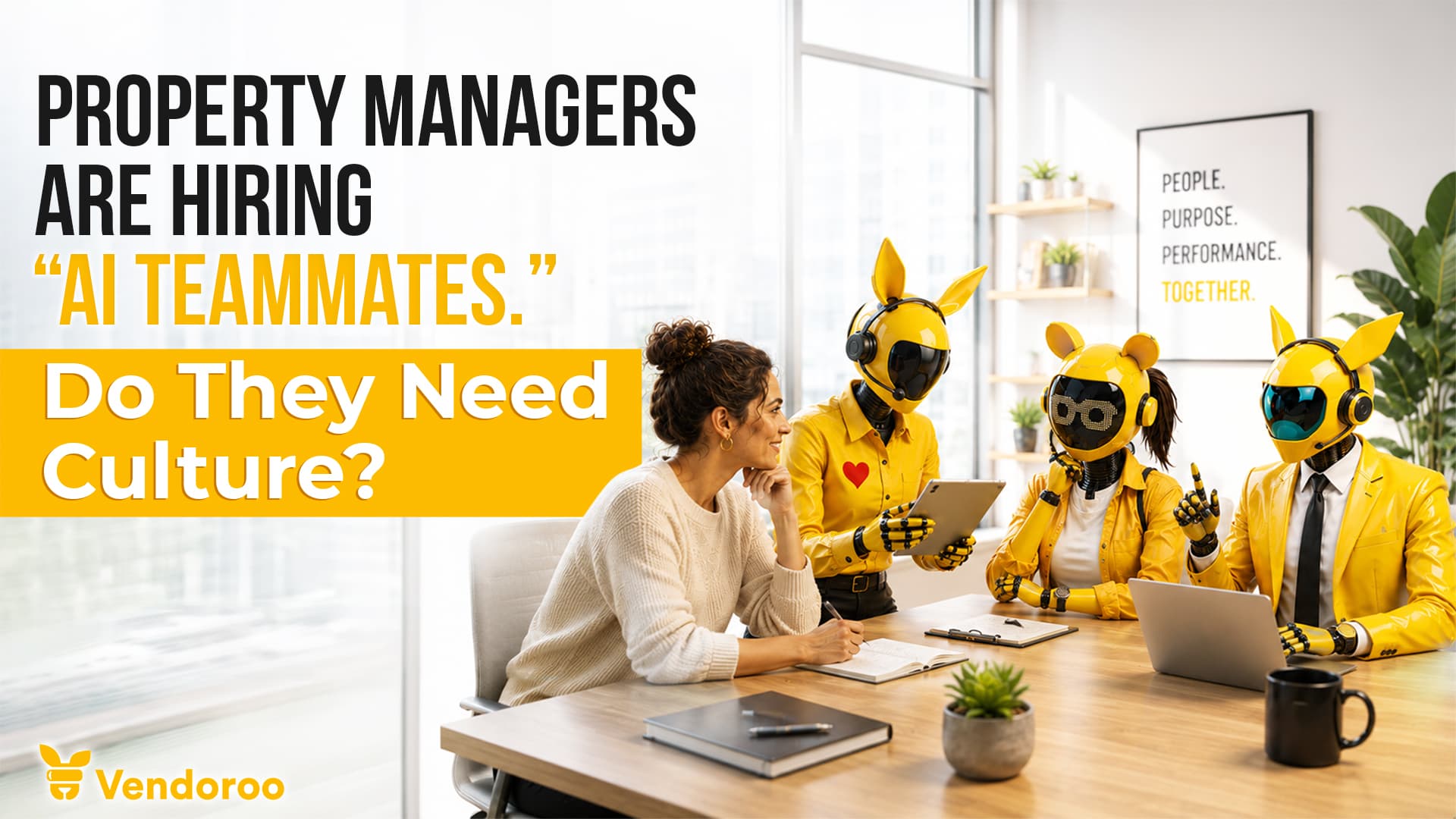
Property Managers Are Hiring “AI Teammates.” Do They Need Culture?
Does AI Take Away The Personal Touch?
I read an article recently about whether AI agents, now acting more like employees, need culture. And it put language around something I think a lot of property managers already feel.
When property managers say, “I don’t want AI to take away the personal touch,” I usually hear a very legitimate concern underneath it.
They’re not saying every work order needs a human.
They’re saying that when a resident is frustrated, a vendor is confused, or an owner is losing confidence, the experience still needs to feel like it came from their company.
Because personal touch isn’t only about who does the work.
It’s about how the work makes people feel.
That’s why, while the article was written about brand and for marketers, it gripped me with its opening statement-
“Every vendor wants to sell you an AI coworker, but an AI agent with no culture is basically your brand freelancing in front of customers at a scale you can’t watch.” - State of Brand Article
In property management, that means representing you when a resident is frustrated, you’re at the mercy of a vendor’s schedule, the owner is doubting you, and maintenance decisions are happening while you’re trying to just eat dinner with your family in peace.
That’s a problem for control freaks.
So when a property manager worries about AI taking away the personal touch, it’s not always resistance to AI.
It’s a trust question.
And this is why personal touch cannot be solved by AI workflow automation alone.
Automation dictates the next step.
Culture dictates how to show up and how to decide.
By the way, if you want to see how to retain this kind of personal touch without living in the weeds, join David Normand and me this Thursday, July 23 at 2:30 PM EST for an exclusive first-look session on taking back control of your operations. I’ll share the full details at the bottom of this email, but you can CLICK HERE to lock in your spot now!
Culture Makes Personal Touch Consistent
If personal touch is about how the work makes people feel, culture is what makes that feeling repeatable.
It’s what makes thousands of daily micro-decisions feel like they came from a single brain. Or the shared rules that guide your team through every interaction, decision, and roadblock. Ultimately, culture is how a business keeps its promises- repeatedly, without depending on one person every single time.
It’s why one resident feels heard.
Why one vendor gets clear direction.
Why one owner feels like your team is in control.
And why that experience can feel consistent even when different people are involved.
I used to think culture is something organic. That it was a byproduct of the people in the room. But I was wrong.
Culture is something that companies design, build, and enforce. This became obvious to me the first time I sat in on JWB Rental Home’s all hands meeting in 2019.
I saw a team of 70, managing 2,500 doors, completely locked into each other, rowing in the same direction, and realized this meeting was the secret sauce to how that feeling was built.
JWB’s clients are also fast to tell you that their team is the reason why they do business with them. They’ll compare them to In-N-Out Burger or Chik Fil A because every time they deal with one of their employees, they walk away feeling impressed by the level of care inside the organization.
They scaled personal touch because they are obsessed with their culture, have codified it, and found ways to teach it to everyone in the company.
They’ve grown to manage 6,000 doors and that feeling still remains.
I wrote this piece about JWB’s TMM (Tuesday Morning Meeting) after an interview with their Director of Property Management. You can read it or watch the whole conversation embedded in the article.
Culture Isn’t In Your Data, It’s In Your Brain
A while back, I wrote a newsletter called The Data Myth That Confuses Property Managers.
Some people laughed at it.
The assumption was obvious: whoever has the most property management data will build the best property management AI.
More doors. More work orders. More history.
Better AI.
That may be true for software that searches, summarizes, or suggests. It breaks the moment an AI agent starts speaking for your company and making decisions.
Vendoroo’s CEO, Reza Kesh simplified it for me this way, at the time:
Building an AI tool is like writing textbooks.
Building an AI agent is like raising a student through school.
A textbook can tell an agent the NTE is $500, which vendor the owner prefers, and how the last 1,000 leaks were handled. It can’t teach the agent when a resident needs reassurance, when a vendor needs pressure, or when an owner needs a phone call instead of another update.
That requires a curriculum.
Context. Correction. Judgment. Culture.
As Reza said, “No one has the data. Whoever says they have it is lying.” His point was that nobody had captured the structured experience required to teach an AI how to become a trustworthy operator.
You can read the article I wrote or just watch the conversation about textbooks vs curriculum that we had in December 2024.
For a property manager who has spent years building their culture and reputation, the issue isn’t fear of automation.
It’s fear of something that doesn’t think like you speaking for you.
So before you allow an AI to communicate with your residents, vendors, and owners, ask:
Whose brain does the AI come with?
And
How will it learn what’s currently inside my brain?
For us, that started with David Normand.
The Brain You Inherit When Hiring An Agentic Teammate
David Normand is Vendoroo’s Chief PM, but before that, he spent years inside maintenance operations learning what separates a completed work order from a well-handled one.
His story matters here for one reason: it shows what any AI needs before it can be trusted to represent a property management company. His system for training people was simple.
Put himself in the middle of the maintenance team. Watch how they handled real situations. Correct the decision. Explain why. Repeat until the team started thinking the way he did.
That’s how he taught empathy.
Not by telling coordinators to “be nicer,” but by showing them when a 90-year-old resident shouldn’t be pushed through the same troubleshooting steps as everyone else. When a frustrated vendor needs clarity instead of pressure. When an owner needs reassurance- not another status update.
Those decisions rarely live in an SOP.
They live inside the best operator’s brain.
So when we began building ROO, we replicated David’s original training system. First he reviewed thousands of work orders with an AI. Then he hired a team around him that reviewed hundreds of thousands of work orders with the AI. All while David listened, rewarded good behavior, and gave context on how to handle edge cases.
Today, that’s added up to teaching ROO how to handle over 2 million workflows using the judgment David helped teach it, bolstered by feedback from all our clients.
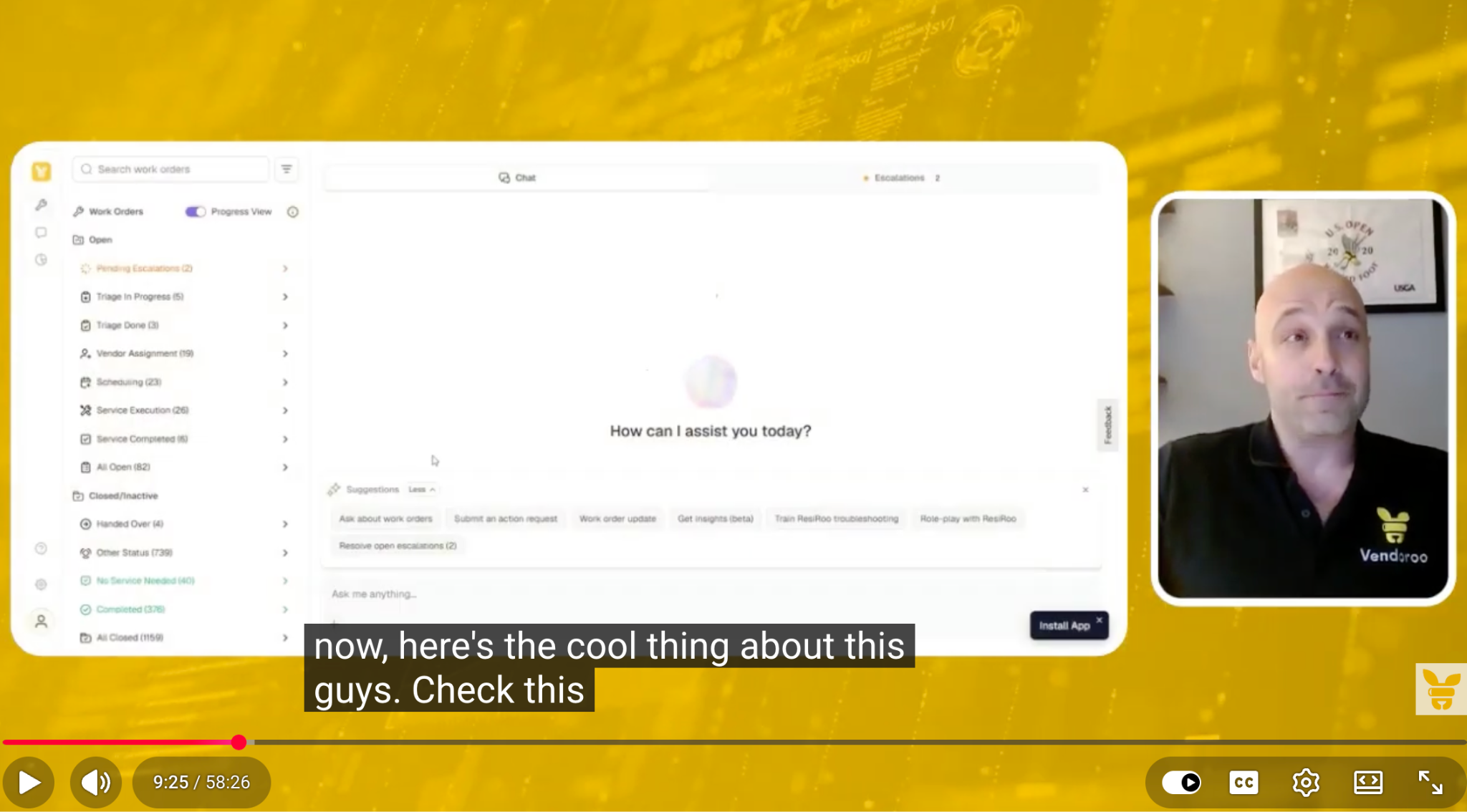
This is David talking to a table of property managers about the big difference with what people think of as chatbots and the embedded empathy and intelligence his second brain comes with.
That’s why David describes ROO as arriving with roughly 85% of the intelligence already built in.
But your company culture probably isn’t exactly like David’s.
The remaining 15% is what he calls “your flavor”- your owners, your vendors, your standards, and the personal touch your reputation was built on.
The next challenge was pulling that out of your brain.
What It Actually Means To Give AI Your Culture
Giving an AI your culture shouldn’t start with a blank document and the assignment to “write down everything in your brain.”
Nobody has time for that. A trustworthy onboarding process should begin by learning from how your company already operates. What follows is the best way to do that based on 500+ onboardings.
We let the AI analyze your historical work orders and communications- how your team assigns vendors, handles NTEs, troubleshoots issues, updates owners, and responds when residents get frustrated.
Then it holds up a mirror.
Here’s how your company operates today.
Here’s what your best people do consistently. Here’s where two coordinators handle the same situation differently. Here’s what appears to be policy, and what may have become a habit nobody intended.
That’s when our AI experts interview you.
Not just about what you do, but what you’d like to change.
Which behaviors should stay? Which decisions should happen differently? What should every resident, vendor, and owner consistently feel when they interact with your company?
We take those answers and normalize them into something the agent can actually learn.
Your rules. Your judgment. Your culture.
Then you get an intuitive way to oversee the agent, correct decisions, explain why, and watch those corrections shape what happens next.
If You Want Control, You Need To Teach Culture
If your first reaction to AI was, “I don’t want something else talking to my residents, vendors, and owners,” that wasn’t irrational.
Handing over those relationships is scary.
It was probably scary the first time you hired a maintenance coordinator, too- because the fear was never that somebody else would answer the phone.
It was that they wouldn’t think like you.
They might push a resident when you would’ve slowed down. Approve a vendor you don’t trust. Send an owner a cold status update when what they really need is reassurance.
That’s how personal touch gets lost.
Not when somebody else does the work.
When they do it without understanding the culture behind the work.
The same rule applies to humans and AI. Both need standards, coaching, correction, and a way to understand why one decision was right and another wasn’t.
AI just has to be deliberately built for that kind of learning.
So before handing it control, ask:
Whose judgment shaped it before it arrived?
A good answer should include real operators (not just engineers, prompts, or generic industry data).
How will it learn the way my company operates?
It should study your real decisions, reflect them back to you, and help you decide what stays and what changes.
Will my feedback change what it does next?
Correction should be done as naturally as you would a new employee (not disappear into a support ticket).
Can I oversee it without becoming the bottleneck again?
You should be able to inspect, coach, and redirect it without returning to every work order.
You were right to protect your personal touch. And you don’t need to become less controlling to use AI.
You need an AI teammate whose judgment you can inspect, correct, and shape. Just like any great employee.
Because the goal isn’t to give up control.
It’s to stop carrying every decision yourself without losing control of how those decisions get made.
Pablo Gonzalez
Chief Evangelist, Vendoroo
P.S. AI has uncovered new metrics that are a control freaks dream. Come see them!
This Thursday, July 23 at 2:30 PM EST, Vendoroo’s Chief PM David Normand and I are hosting an exclusive, first-look session to show you how our latest AI insights let you trade vague metrics for real KPIs. Trust me- if there is one webinar you attend this year, make it this one.
CLICK HERE TO CLAIM YOUR SPOT before seats fill up!