Growth & owners
The Per Door Pricing Trap of Agentic AI: Why Big Operators Suffer While The Small Ones Race Ahead
🎧 Listen to the Audio Version
Last week, I was at a NARPM chapter event in Dallas-Fort Worth talking with Hannah, who manages about 120 doors. We were discussing Vendoroo’s pricing model, which ranges from $3 to $8.50 per door depending on the package. When we got to the full $8.50 package, she did the math right there: 120 doors comes out to $1,020 a month.
Her reaction was immediate. At that level, it felt like a no-brainer.
And I understood exactly why. She was not thinking about it like software. She was thinking about what it would cost to have a very capable person helping cover intake, troubleshooting, triage, work order creation, vendor coordination, follow-up through completion, and the inevitable loose ends that still require outbound human support. At that portfolio size, the comparison felt intuitive.
But the larger the portfolio gets, the more this math starts to play tricks on people.
At 1,500 doors, $6 per door becomes $9,000 a month. Annualized, that is $108,000 a year. Suddenly, what felt obvious at 120 doors starts to feel like an outrageous bill.
That is the trap.
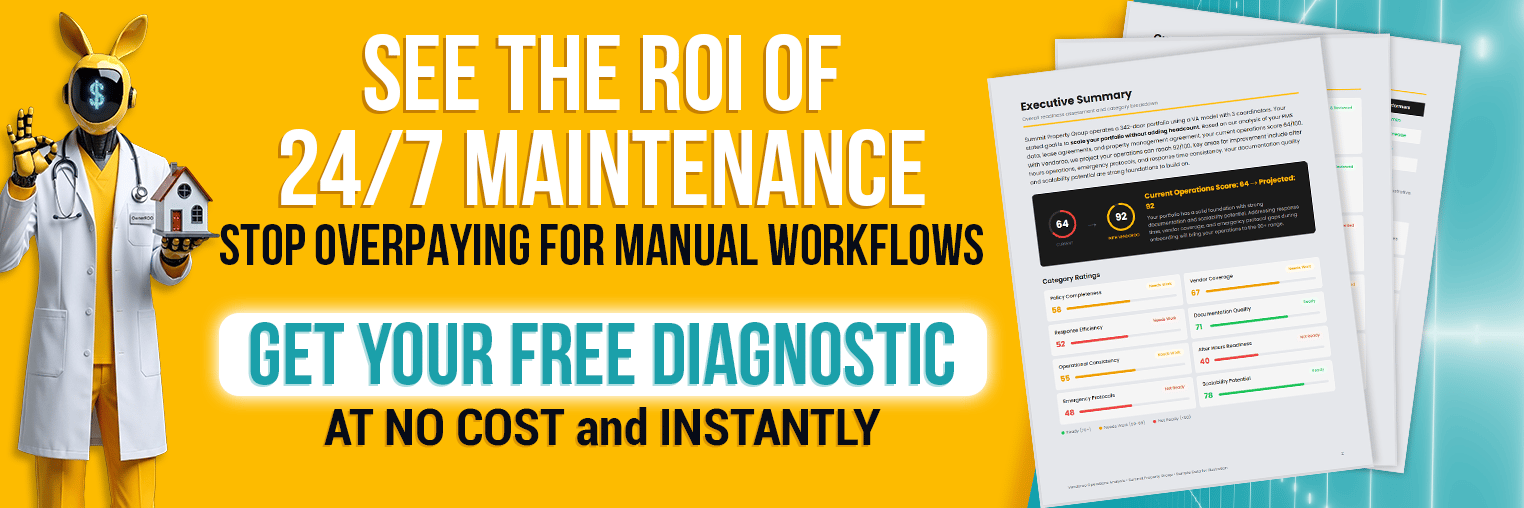
If you're tired of guessing, take a FREE diagnostic demo to map your current labor spend against the true cost of 24/7 coverage. Stop paying for seats and start seeing the math for results.
The math is not wrong. The comparison is.
Per-door AI pricing starts to feel distorted the moment buyers evaluate it like software instead of operational coverage.
The mistake is not in the arithmetic. The mistake is in what people think they are buying. If you believe an AI agent belongs in the same category as a normal software subscription, then of course the number starts to feel wrong. Software is supposed to feel cheaper at scale. It is supposed to sit quietly in the background, spread across a large operation, and never feel like a major labor line item.
So when agentic AI starts to look like a six-figure annual spend, the instinct is to recoil: Why would I pay that much for software?
That reaction is understandable. It is also incomplete.
Because that is not what this is.
You are not buying software seats. You are buying coverage.
Software is a tool your team uses. An AI agent helps own outcomes.
AI agents like Vendoroo are not charging you for logins. We are not charging for a dashboard. We are not even charging you for automation in the old sense of the word. We are charging for responsiveness, consistency, and capacity that your team would otherwise have to create through some combination of people, software, process, oversight, and after-hours support.
That distinction changes everything.
A traditional software platform sits there until your team touches it. An AI agent is participating in the work itself. It is answering tenant concerns. It is triaging. It is keeping communication moving. It is creating and progressing work orders. It is coordinating the people involved. And when paired with real human support where needed, it is covering a much broader slice of the maintenance process than most people account for when they first hear the price.
You are not buying software seats. You are buying coverage.
Once you see that, the per-door model stops looking like an inflated SaaS fee and starts looking like a different kind of operational investment.
A salary buys a shift. Maintenance demands a 24/7 outcome.
The question is not whether one AI agent equals one employee. The question is what it costs to maintain responsiveness across the full maintenance workflow.
Recently, I saw my friend Mark Ainley in Chicago thinking through staffing needs for his maintenance department. He was hiring for a Remote Maintenance Dispatcher at $10 an hour, a Maintenance Vendor Coordinator at $7 an hour, and a Property Management Customer Service role at $7 an hour.
I know Mark has spent a lot of time thinking deeply about this problem, including what it takes to build technology internally, so I reached out to have a more nuanced conversation about how to evaluate this category.
What emerged from that conversation was not some grand conclusion. It was a better question.
On the surface, it is easy to look at Vendoroo’s $6 per door pricing and assume the AI is more expensive. At 1,500 doors, that pricing becomes $108,000 per year. That number can feel big fast.
But that comparison changes when you look at what the labor is actually buying you.
Because in practice, a human staffing model is usually being built to cover an 8-hour workday, 5 days a week. Maintenance is not. Maintenance is a 24/7 operational outcome.
So here is a more useful way to think about it: if you divide the annual cost of agentic coverage by the number of hours in a year, $108,000 divided by 8,760 hours comes out to $12.33 per hour of always-on coverage.
$12.33 per hour of always-on coverage is a very different lens than looking at the same number as a six-figure annual software bill.
That is not a perfect apples-to-apples comparison, and it is not meant to be. But it is far more useful than comparing agentic coverage to one daytime role, one salary line, or one software subscription.
The insight is not that AI equals three employees, or that you can reduce everything to a neat 3:1 shift ratio. That is too simplistic to be useful.
But here is the AHA, as our Chief PM, David Normand puts it:
“100% of your labor expense is spent on 35% of your operating window. We are a 24/7 industry. Start thinking in 24/7.”
A full-time employee covers a shift. An AI agent helps cover a 24/7 outcome.
That does not mean the AI replaces a whole department. It means the economics change once you stop comparing it to one narrow input and start comparing it to the broader operational burden it is helping absorb.
This change doesn't just change the math of the business. It fundamentally upgrades the role of your people from manual coordinators to high-leverage "AI Team Leads" who oversee the entire process.
And once you have an AI Team Lead at the helm-
The real comparison is not one hire. It is your whole maintenance cost stack.
Daytime coordinators, after-hours support, maintenance software, vendor follow-up, and management oversight all belong in the comparison.
Because, as in the example above, the real cost is rarely one salary.
It is the people working maintenance coordination during the day. It is the after-hours coverage that has to exist when the office is closed. It is the software you are paying for just to route, track, and manage the work. It is the management overhead required to keep all of those handoffs from breaking down. And it is the reality that, as door count grows, you do not just need effort. You need full coverage.
And coverage doesn’t just mean managing the work that comes in- it means having the intelligence to stop unnecessary work before it ever hits your bottom line.
That is the comparison most operators skip.
They compare $6 per door to a salary line, a few hires, or a software subscription, and it feels expensive. But that is not the real alternative. The real alternative is the full cost structure required to deliver timely, consistent maintenance communication and coordination across the whole portfolio.
That is why smaller operators often get it faster. They feel the operational pain directly, so they compare the price to reality. Larger operators have more moving parts, so they are more likely to compare the price to a category label.
Software.
That is where the trap lives.
The bigger the portfolio, the easier it is to misread the price.
Scale makes the annual bill more visible while hiding the real cost of the alternative.
That is why larger operators are not wrong to pause at the number. In many ways, they are asking the right question. They just need a better frame for answering it.
Not: “Is this too expensive for software?”
But: “What does it really cost us to create this level of coverage, responsiveness, and coordination without it?”
That is a much more useful conversation. It is also the conversation that makes per-door pricing make more sense. Every door creates operational demand. Every door adds the potential for resident communication, maintenance issues, vendor coordination, follow-up, and friction. Pricing by door is not arbitrary. It is tied to where the work comes from.
But it isn’t just about the fee per door. It’s about the hidden cost of manual bottlenecks that quietly double your maintenance spend.
So yes, per-door pricing can look expensive when you flatten it into an annual SaaS number.
But when you compare it to the real cost of building round-the-clock operational coverage with people, tools, process, and oversight, the math starts to change.
And in many cases, it changes a lot.
What looked expensive as software starts to look much more reasonable as coverage.
That is the per-door pricing trap.
And that is how incumbents get overtaken.
That trap has a bigger consequence than one bad pricing conversation. It is how market leaders fall into the Innovator’s Dilemma.
Blockbuster did not ignore Netflix because DVD-by-mail and streaming were obviously bad ideas. They ignored it because the economics looked worse through the lens of their current model, and they believed they could build the future internally without disrupting the present.
You may remember that Blockbuster actually built a successful DVD-by-mail operation. What most people do not know is that they pulled back when it threatened their existing economics, including revenue per square foot in their stores. That decision did not just protect the old model. It helped kill their future.
That is the real risk for larger operators. If you misread agentic AI because it does not fit your current cost structure, you may not reject the future because it is wrong. You may reject it because it threatens the logic of the system you already built.
And that is how incumbents get overtaken.
If you want help evaluating agentic AI through the lens of coverage instead of software, Vendoroo can help.
Pablo Gonzalez
Chief Evangelist at Vendoroo
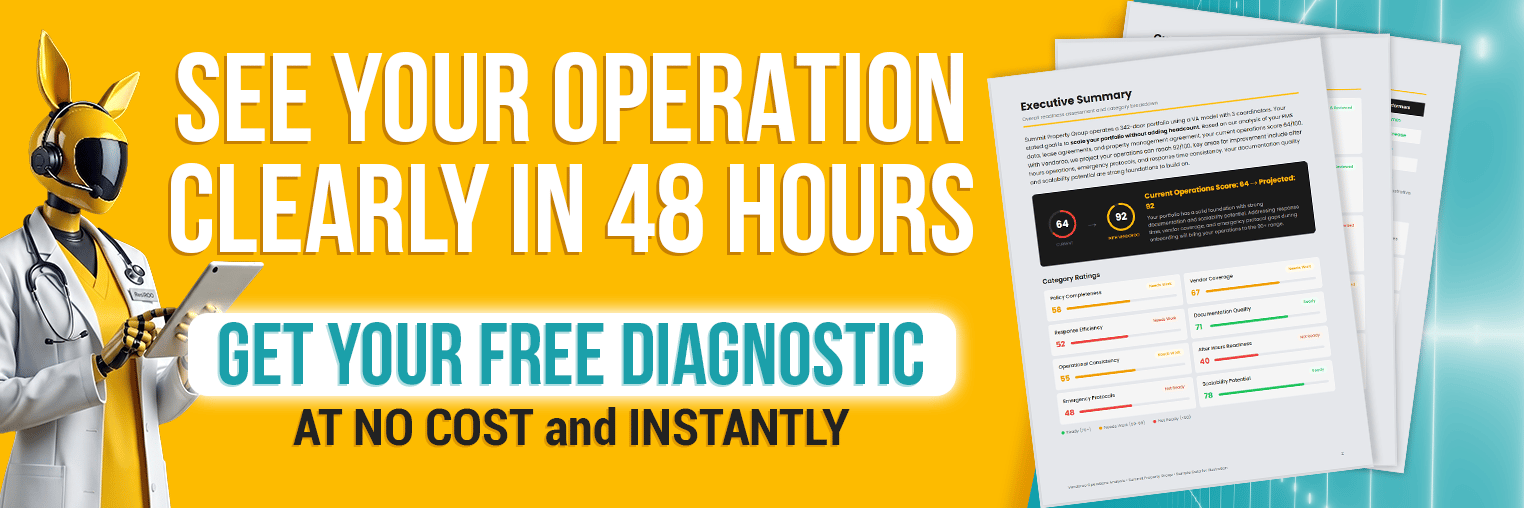
This is a free analysis specific for your portfolio, but slots are limited. Book a demo now.